Thursday, November 1, 2018

Crypto Kumbaya

To view this email as a web page, go here.

Sponsored by
 
November 1, 2018

SCALING SING-A-LONG: Ethereum founder Vitalik Buterin closed his keynote at the Devcon4 event by commemorating ethereum development ideas that never quite made it past the early stages. And, unusually, he did it with a song.

During his remarks, Buterin touched on ideas revolving around ethereum's impending shift to becoming a more ecological and scalable platform in the near future, beginning with the blockchain's move to a proof-of-stake consensus algorithm with its Casper upgrade. 

He also outlined a four-step plan combining Casper with another proposed scaling solution – while others have called it Shasper, Buterin prefers Serenity.

As envisioned, Serenity will first introduce the “beacon chain,” which will co-exist alongside ethereum and allow Casper validators to participate. This will be followed by a simplified data storage form of sharding, after which users will be able to send messages and funds using shards. The final phase will simply optimize the platform.

And then, of course, came the singing. Full Story

CASH FOR KITTIES: Dapper Labs, the company currently behind the development of CryptoKitties, just secured $15 million in new funding from the likes of Google and Samsung's venture arms, among others. The investment comes just months after it raised $12 million from a group that included a16z and Union Square Ventures.

Dapper Labs CTO Dieter Shirley hinted that the startup was looking to vastly expand its offerings in the coming weeks, pointing to a more game-centric focus in the period to come.

"Ultimately our mission here is to bring a billion people to the blockchain. We think blockchain has real value for consumers but we're never going to get them to see that value by explaining it," he told CoinDesk. Full Story

ATMS APPROVED: Bitcoin ATM operator Coinsource has become the 12th crypto company to receive a BitLicense from the New York State Department of Financial Services (NYDFS).

The firm announced news on Thursday, with its general counsel, Arnold Spencer, noting that it was the first NYDFS license granted to a bitcoin ATM provider to date. The company already has 40 BTMs in the state, having been operating under a provisional license pending full approval.

Compared with traditional exchanges, the firm's BTMs are convenient and offer direct peer-to-peer transactions, Spencer told CoinDesk, adding: "We do our account opening and compliance in real-time."

Going forward, the company aims to add more cryptocurrencies once regulatory approval is granted, and it's also eyeing expansion across all 50 U.S. states, as well as internationally. Full Story

DELTEC SPEAKS: Stablecoin issuer Tether Limited confirmed Thursday it was banking with Bahamas-based Deltec Bank and Trust Limited and published a letter purportedly from the institution as evidence of its reserves.

The company, which issues the controversial tether (USDT) stablecoin, has long been under fire over concerns that it does not have the fiat holdings to fully back the tokens in circulation. It had been rumored for weeks to be working with Deltec but did not previously acknowledge the relationship.

"The acceptance of Tether Limited as a client of Deltec came after their due diligence review of our company," the issuer said in a blog post. Full Story


We're excited to announce that CoinDesk has partnered with MarketWatch to release our Crypto Sentiment Survey, sponsored by Zion Trades. 

In the above research, we find two interesting points that jump out. 

First, 57% of MarketWatch readers believe that bitcoin is too risky an investment to buy, marking a stark difference from CoinDesk readers. However, the two audiences are more in agreement that, while risky, a small amount of investment is within an acceptable tolerance range. 

For more insights in this sentiment survey, check out the full report here
SPONSOR SECTION


HYCON - Hyperconnected Coin - is a new, minable blockchain protocol featuring on-chain scalability with high transaction throughput capacity in a fully decentralized manner.  

On October 31st, HYCON will implement the GHOST Protocol, which marks an important milestone in our journey towards becoming a DAG-based blockchain with the SPECTRE consensus algorithm. 
 
Check out our code on GitHub and follow us on social media to stay updated on our progress. 

Learn More Here
 

LOOKING UP? Is a near-term rally in the future? Bitcoin's defense of the key 21-month EMA support for five months straight, as well as the positive historical performance in November, raises the possibility. Full Story

BEST OF THE BEST

FORBES: Delving into the murky world of porn, a Forbes contributor discusses how, while early attempts to develop cryptocurrencies to serve the adult industry “flopped miserably,” things have shifted in the last year.

After major websites such as xHamster began to accept bitcoin, and services like Pornhub teamed up to welcome altcoins like Horizen (the crypto formerly known as ZenCash) and Tron, new crypto projects have sought to cater to the industry directly with dedicated tokens.

With examples like OGOcoin, BOOTY and WankCoin, the piece suggests that new "porncoin" projects feel their tokens can help solve the major industry issue that almost no one pays for adult content these days.

Winning mass adoption won’t be easy, though, the piece finds, with cryptos presenting a steep learning curve for the industry, and little real reason for users to switch when bank cards are much simpler for most people to use.
 
THE REST

ZDNET: Enterprises are jumping onto the blockchain bandwagon simply because of the fear of missing out. At least, so says David Furlonger, a vice president at tech analysis firm Gartner. 

Speaking at a recent event, Furlonger said: “It's still not appropriate for the vast amount of enterprises to consider blockchain technology in its current level of maturity.”

He added that all the features that blockchain has – immutable records, encryption and decentralization – “none of that is new” and can be carried out with existing technology that firms may be more used to.

THE CONVERSATION: Blockchains are known for their immutability – meaning data is recorded permanently. But this feature can also be an issue in areas where “right to be forgotten” laws require that data should sometimes be removable, according to a piece from The Conversation.

To combat this privacy issue, a team of researchers have designed a tool, via which data can be removed from the database without affecting a blockchain’s consistency. The tool still leaves a hash on the blockchain, however, as a proof of the original data’s existence, in case disputes arise at a future date, they say.

Consensus: Invest Keynotes


Jay Clayton
Chairman of the Securities and Exchange Commission


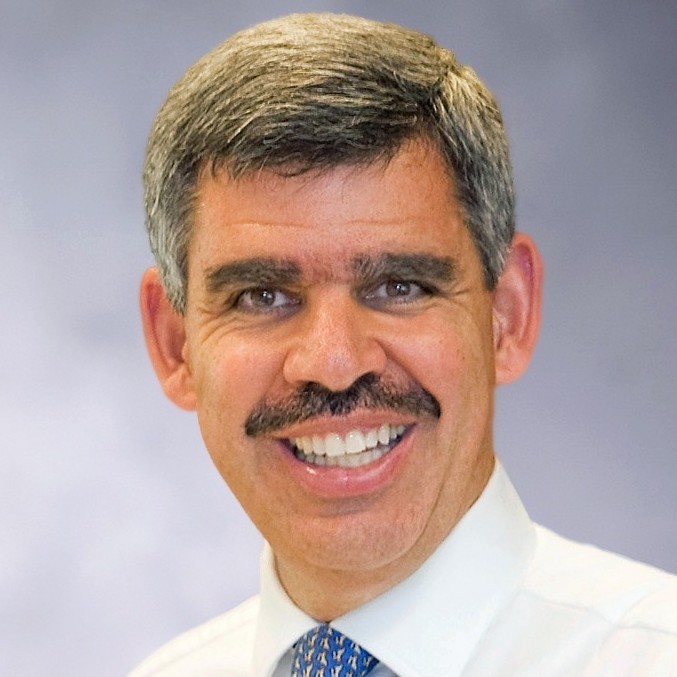
Dr. Mohamed A. El-Erian
Chief Economic Advisor at Allianz
Register Now

WHO WON #CRYPTOTWITTER

 
Facebook
Twitter
Instagram
LinkedIn
Copyright © 2018 CoinDesk. All rights reserved.

Our mailing address is:
250 Park Avenue South New York, NY, 10003, US


Want to change how you receive these emails?
You can update your preferences or unsubscribe from this list  


#100: Why Vitalik is trying to fade into Ethereum’s background

Dreams of decentralization
MIT Technology Review
Chain
Letter
Blockchains, cryptocurrencies, and why they matter
11.01: Dreams of decentralization

Welcome to Chain Letter! Today’s is a special edition, live from Prague, where the Ethereum’s idealistic community has gathered for its annual developers conference, Devcon. Ambitious plans to upgrade Ethereum’s protocol have dominated the discussions so far this week. But close behind have been conversations about the unique social challenges Ethereum faces, particularly how to address complicated technical challenges without sacrificing the community’s prized decentralization. We managed to get some time alone with Ethereum founder Vitalik Buterin to discuss its future—and his part in it.

When you ask him about the challenges facing the blockchain system he founded five years ago, Vitalik Buterin often launches into a rapid-fire lecture full of Ethereum-specific jargon. But ask him about his own role in the technology’s future, and he quickly becomes more circumspect.

There’s no doubt that Buterin is still the guiding light for the idealistic community that has sprung up around his creation. That’s been front and center in this week in Prague. The most popular discussion topic is the 24-year-old’s vision for “Ethereum 2.0,” a future iteration meant to be capable of operating efficiently at a much larger scale—and appeal to a much broader user base—than it can today. But in a conversation with MIT Technology Review on the sidelines of Devcon, Buterin says it’s time for him to start fading into the background. This change is “a necessary part of the growth of the community,” he says.

Why? Put simply, a truly decentralized system has no single component whose failure could bring down the whole system, and that’s arguably what Buterin’s historically outsized influence over decision-making represents. But that’s changing, he says. This is partly due to the community’s natural growth, he says, but also thanks to a deliberate attempt to reduce his prominence. “I think people are kind of really feeling that,” he says, citing Twitter chatter he’d seen after Devcon’s first day. “There was even one comment that explicitly said that like, wow, it seems like the community is actually working together and isn’t just relying on a few people being in charge.”

Indeed, already “(Buterin) is out of the decision-making in a lot of ways,” said Hudson Jameson of the Ethereum Foundation, a nonprofit that supports the development of the Ethereum protocol, during a discussion at Devcon focused on how the community can get better at making decisions collectively. “That’s something that I think is really really important for the ecosystem to thrive and become more decentralized.”

The transition comes at a critical juncture for Ethereum, whose developers are struggling to overcome a number of complicated technical obstacles they believe to be standing in the way of its more widespread adoption. Topping the to-do list is an ambitious plan to transition away from proof-of-work—the energy-intensive process that Ethereum, Bitcoin, and other similar blockchain systems use to achieve agreement among network participants that the information they stored in their blockchains is valid. For years, Buterin has spearheaded a research project aimed at developing an energy-efficient alternative to proof-of-work, based on a different algorithm called proof-of-stake.
 
He’s also played a leading role in conceiving of new methods called sharding and plasma, which would let the network handle much larger transaction volumes by letting users execute certain transactions without having to write every single one to the blockchain. (Ethereum can process only about 15 transactions per second, whereas Visa handles an average of 2,000 transactions per second, and has the capacity to handle tens of thousands.)
 
All these improvements are meant to be featured in Ethereum 2.0, the specifications for which Buterin has been instrumental in writing and finalizing. Nonetheless, he says, his involvement in the project has amounted to “a significantly smaller share of the work than I had two or three years ago,” adding that downsizing his influence is “something we are definitely making a lot of progress on.”


Are you a thought leader, innovator, and executive looking to make your opinion heard?

We're now accepting applications to the MIT Technology Review Global Panel. Learn how to share your expertise and opinions today.

Loose Change

Fill your pockets with these newsy tidbits.

Satoshi Nakamoto’s Bitcoin white paper just had its 10th birthday. Here are some thinkpieces.

Accounting firm EY (formerly Ernst and Young) says it has developed the first implementation of zero-knowledge proof privacy technology on Ethereum. (CoinDesk)
+A mind-bending cryptographic trick promises to take blockchains mainstream. (TR)

Coinbase raised an additional $300 million in funding, with investors valuing the popular cryptocurrency exchange at $8 billion (Reuters)

The petro, Venezuela’s national cryptocurrency, is finally available for sale. (The Block)

For some reason, Consensys, which funds new projects based on Ethereum, has purchased the assets of Planetary Resources, a company originally formed with the goal of mining asteroids. (CoinDesk)

Hong Kong’s securities regulators have introduce new rules for investment funds whose portfolios include digital currency, and said they may regulate crypto exchanges. (Bloomberg)

The Money Quote

The nation state is a technology like any other, and that technology is beginning to show its age. And we should be having this dialogue about how we can do better.”

Ethereum core developer Lane Rettig, during his talk Wednesday at Devcon. Rettig thinks perhaps decentralized systems like Ethereum represent an alternative model.  

Mike Orcutt
We hope you enjoyed today's tour of what's new in the world of blockchains and cryptocurrencies. Send us some feedback, or follow me @mike_orcutt.
Know someone who might enjoy reading Chain Letter?
Forward this email
Was this forwarded to you, and you'd like to see more?
Sign up for free

Artificial intelligence is here. Own what happens next.

Attend EmTech Digital 2019
March 25-26, 2019, St. Regis Hotel
San Francisco, CA

Register Now
You received this newsletter because you subscribed with the email address: contacto1745.send-mail@blogger.com
edit preferences   |   unsubscribe   |   follow us     
Facebook      Twitter      Instagram
MIT Technology Review
One Main Street
Cambridge, MA 02142
TR

Going Gold 🏆

November 1, 2018

unbankdlogo.png

QUOTE OF THE DAY

“Investing is the intersection of economics and psychology.”
- Seth Klarman


MARKET
COIN PRICE 24H

BTC $6,391.930044 +1.07%

ETH $199.436764 +1.05%

XRP $0.452666 +2.12%

BCH $424.277999 +1.57%

EOS $5.266254 +2.14%

*Information as of 10:00 AM EST


INSTITUTION

JP Morgan to Tokenize its Gold Bars on its Own Blockchain

Actual ‘digital gold’

JP Morgan has unveiled plans to tokenize gold bars on its blockchain Quorum. The bank is turning to blockchain to reduce the friction involved in commodities trading.

The tokenization of a commodity like gold reduces the costs and risks for traders. It also permits two parties to complete a transaction without the need of a third party, such as a broker. Quorum even allows people outside of JP Morgan to tokenize their gold.

How the tokenization works

Umar Farooq, JP Morgan’s head of blockchain initiatives, described the process of bringing a physical gold bar onto the blockchain:

"They wrap a gold bar into a tamper-proof case electronically tagged, and they can track the gold bar from the mine to end point – with the use case being, if you know it's a socially responsible mine, someone will be willing to pay a higher spread on that gold versus if you don't know where it comes from. Diamonds is another example."

A little more about Quorum

Quorum is a fork of Ethereum developed by JP Morgan for enterprise use cases, such as tokenizing gold. JP Morgan could be considered an ‘Ethereum maximalist’. The company praises the protocol for its decentralization and performance.

Quorum may eventually be spun out of JP Morgan to its own entity. The company is researching numerous use cases for the blockchain network.

14131bd1-4966-439a-967a-fda7fb823549.png 42458bd8-d158-4e97-847f-649e2ec7db28.png 42458bd8-d158-4e97-847f-649e2ec7db28.png baf3ea07-8e23-4ef1-ab81-2c7dd0e535cc.png
SPACE

ConsenSys Wants to Mine...Asteroids?

Turning toward space

According to a press release published yesterday, ConsenSys Inc. has acquired Planetary Resources Inc. for an undisclosed amount.

Founded in 2009, Planetary Resources is on a mission to collect the natural resources available in the solar system by exploring asteroids. The venture brings hopes that the newly found asteroid resources will bring “a new paradigm of travel and human presence in space.”

Since ConsenSys is traditionally a blockchain software company that invests in blockchain-related startups, it’s interesting that CEO Joseph Lubin has turned towards space exploration.

Enter Ethereum

According to the press release, Planetary Resources will help ConsenSys bring Ethereum’s capabilities to facilitate the next frontier’s commerce.

Speaking on the subject, Lubin commented:

"Bringing deep space capabilities into the ConsenSys ecosystem reflects our belief in the potential for Ethereum to help humanity craft new societal rule systems through automated trust and guaranteed execution."

Planetary Resources is only one project in a portfolio of ventures that have hopes to decentralize different industries.

14131bd1-4966-439a-967a-fda7fb823549.png 42458bd8-d158-4e97-847f-649e2ec7db28.png 42458bd8-d158-4e97-847f-649e2ec7db28.png baf3ea07-8e23-4ef1-ab81-2c7dd0e535cc.png
INTERNATIONAL

Venezuela’s State Crypto ‘Petro’ is Now Available for Sale

Background on Petro

In December of last year, the government announced that they are establishing a national cryptocurrency to combat the hyperinflation problem. The government-backed coin is called 'Petro' and is claimed to be backed by the country's oil reserves.

The hyperinflation has been caused by the country's central bank endlessly printing more currency to pay for the massive deficit the government is running. The economic effect has been even more severe than the Great Depression and the impact of the falling of communism on Russia.

As a result of the hyperinflation, it now costs 1,000,000 bolivars to buy a cup of coffee (29 US cents) and rather than counting bills, merchants instead resort to weighing stacks of cash to estimate its value.

Now for sale

Months in the making, Petro is now available for sale to the public. Venezuelan citizens are able to buy the digital currency with either Bitcoin or Litecoin via a web portal controlled by the government.

Now that it is available to the public, we will finally see if this idea can complete its mission of slowing the hyperinflation. Some have been skeptical of how the government has managed this crypto issuance, but it will ultimately be the citizen's decision if the crypto is trustworthy.

14131bd1-4966-439a-967a-fda7fb823549.png 42458bd8-d158-4e97-847f-649e2ec7db28.png 42458bd8-d158-4e97-847f-649e2ec7db28.png baf3ea07-8e23-4ef1-ab81-2c7dd0e535cc.png
KNOW THE NUMBERS

Affluent Millennials and Crypto

In a new study released by Edelman, crypto seems to be popular among affluent millennials aged 24-38.

The study covered multiple different topics but most interesting was the demographics interaction with cryptocurrencies.

87fa782e-dc4a-4e54-9df9-abd90f8de4ce.png

Perhaps surprising is the trust that this demographic has in blockchain as 74% believe blockchain will make the global financial system more secure.

In addition, 31% of the group is interested in using cryptocurrency but only 25% actually use or hold cryptocurrency - showing possible room for growth.

14131bd1-4966-439a-967a-fda7fb823549.png 42458bd8-d158-4e97-847f-649e2ec7db28.png 42458bd8-d158-4e97-847f-649e2ec7db28.png baf3ea07-8e23-4ef1-ab81-2c7dd0e535cc.png

BITS

But wait, there's more...

  • Announced Wednesday, Dapper Labs, the startup that spun out of parent firm Axiom Zen to continue working on CryptoKitties, has secured $15 million in funding.
  • Crypto exchange Bithumb has teamed up with crowdfunding platform seriesOne to launch a compliant security token exchange in the U.S.
  • Crypto finance company Circle has joined the Global Digital Finance (GDF) industry body as a founding member to develop a global “Code of Conduct” for crypto.

MEME

Bri7ryQf8RIt7CQA0WQsFjZPo7tcNZ28nih_2hs6xQU.jpg?fit=crop&crop=faces%2Centropy&arh=2&w=640&s=f7336f0a414e141f45bed2dd026bbf6d

SHARE UNBANKD


If you ❤️ Unbankd, share us with your friends to help them get crypto smart too!

So far you have 0 referrals but we still have more rewards for you.

5d3ce366-c3c4-40bb-a87b-701169b0875c.png

Or copy & paste your unique link to share:
https://unbankd.co/?ref=192f87b56d


SUBSCRIBE

FEEDBACK

ADVERTISE

620247f1-c290-436d-b181-1ff7ecc0623e.png9148e503-e2ca-4405-8e60-42cf4e623229.pnga16e12a2-ba9c-4b58-a95d-629210d7ac86.png
Unbankd

303 5th Ave SE, Minneapolis, MN 55414

The above is not intended to be investment advice.

Copyright © 2018 Unbankd, All rights reserved.

If you don't absolutely love us, drop us.