Thursday, November 1, 2018

#100: Why Vitalik is trying to fade into Ethereum’s background

Dreams of decentralization
MIT Technology Review
Chain
Letter
Blockchains, cryptocurrencies, and why they matter
11.01: Dreams of decentralization

Welcome to Chain Letter! Today’s is a special edition, live from Prague, where the Ethereum’s idealistic community has gathered for its annual developers conference, Devcon. Ambitious plans to upgrade Ethereum’s protocol have dominated the discussions so far this week. But close behind have been conversations about the unique social challenges Ethereum faces, particularly how to address complicated technical challenges without sacrificing the community’s prized decentralization. We managed to get some time alone with Ethereum founder Vitalik Buterin to discuss its future—and his part in it.

When you ask him about the challenges facing the blockchain system he founded five years ago, Vitalik Buterin often launches into a rapid-fire lecture full of Ethereum-specific jargon. But ask him about his own role in the technology’s future, and he quickly becomes more circumspect.

There’s no doubt that Buterin is still the guiding light for the idealistic community that has sprung up around his creation. That’s been front and center in this week in Prague. The most popular discussion topic is the 24-year-old’s vision for “Ethereum 2.0,” a future iteration meant to be capable of operating efficiently at a much larger scale—and appeal to a much broader user base—than it can today. But in a conversation with MIT Technology Review on the sidelines of Devcon, Buterin says it’s time for him to start fading into the background. This change is “a necessary part of the growth of the community,” he says.

Why? Put simply, a truly decentralized system has no single component whose failure could bring down the whole system, and that’s arguably what Buterin’s historically outsized influence over decision-making represents. But that’s changing, he says. This is partly due to the community’s natural growth, he says, but also thanks to a deliberate attempt to reduce his prominence. “I think people are kind of really feeling that,” he says, citing Twitter chatter he’d seen after Devcon’s first day. “There was even one comment that explicitly said that like, wow, it seems like the community is actually working together and isn’t just relying on a few people being in charge.”

Indeed, already “(Buterin) is out of the decision-making in a lot of ways,” said Hudson Jameson of the Ethereum Foundation, a nonprofit that supports the development of the Ethereum protocol, during a discussion at Devcon focused on how the community can get better at making decisions collectively. “That’s something that I think is really really important for the ecosystem to thrive and become more decentralized.”

The transition comes at a critical juncture for Ethereum, whose developers are struggling to overcome a number of complicated technical obstacles they believe to be standing in the way of its more widespread adoption. Topping the to-do list is an ambitious plan to transition away from proof-of-work—the energy-intensive process that Ethereum, Bitcoin, and other similar blockchain systems use to achieve agreement among network participants that the information they stored in their blockchains is valid. For years, Buterin has spearheaded a research project aimed at developing an energy-efficient alternative to proof-of-work, based on a different algorithm called proof-of-stake.
 
He’s also played a leading role in conceiving of new methods called sharding and plasma, which would let the network handle much larger transaction volumes by letting users execute certain transactions without having to write every single one to the blockchain. (Ethereum can process only about 15 transactions per second, whereas Visa handles an average of 2,000 transactions per second, and has the capacity to handle tens of thousands.)
 
All these improvements are meant to be featured in Ethereum 2.0, the specifications for which Buterin has been instrumental in writing and finalizing. Nonetheless, he says, his involvement in the project has amounted to “a significantly smaller share of the work than I had two or three years ago,” adding that downsizing his influence is “something we are definitely making a lot of progress on.”


Are you a thought leader, innovator, and executive looking to make your opinion heard?

We're now accepting applications to the MIT Technology Review Global Panel. Learn how to share your expertise and opinions today.

Loose Change

Fill your pockets with these newsy tidbits.

Satoshi Nakamoto’s Bitcoin white paper just had its 10th birthday. Here are some thinkpieces.

Accounting firm EY (formerly Ernst and Young) says it has developed the first implementation of zero-knowledge proof privacy technology on Ethereum. (CoinDesk)
+A mind-bending cryptographic trick promises to take blockchains mainstream. (TR)

Coinbase raised an additional $300 million in funding, with investors valuing the popular cryptocurrency exchange at $8 billion (Reuters)

The petro, Venezuela’s national cryptocurrency, is finally available for sale. (The Block)

For some reason, Consensys, which funds new projects based on Ethereum, has purchased the assets of Planetary Resources, a company originally formed with the goal of mining asteroids. (CoinDesk)

Hong Kong’s securities regulators have introduce new rules for investment funds whose portfolios include digital currency, and said they may regulate crypto exchanges. (Bloomberg)

The Money Quote

The nation state is a technology like any other, and that technology is beginning to show its age. And we should be having this dialogue about how we can do better.”

Ethereum core developer Lane Rettig, during his talk Wednesday at Devcon. Rettig thinks perhaps decentralized systems like Ethereum represent an alternative model.  

Mike Orcutt
We hope you enjoyed today's tour of what's new in the world of blockchains and cryptocurrencies. Send us some feedback, or follow me @mike_orcutt.
Know someone who might enjoy reading Chain Letter?
Forward this email
Was this forwarded to you, and you'd like to see more?
Sign up for free

Artificial intelligence is here. Own what happens next.

Attend EmTech Digital 2019
March 25-26, 2019, St. Regis Hotel
San Francisco, CA

Register Now
You received this newsletter because you subscribed with the email address: contacto1745.send-mail@blogger.com
edit preferences   |   unsubscribe   |   follow us     
Facebook      Twitter      Instagram
MIT Technology Review
One Main Street
Cambridge, MA 02142
TR

Going Gold 🏆

November 1, 2018

unbankdlogo.png

QUOTE OF THE DAY

“Investing is the intersection of economics and psychology.”
- Seth Klarman


MARKET
COIN PRICE 24H

BTC $6,391.930044 +1.07%

ETH $199.436764 +1.05%

XRP $0.452666 +2.12%

BCH $424.277999 +1.57%

EOS $5.266254 +2.14%

*Information as of 10:00 AM EST


INSTITUTION

JP Morgan to Tokenize its Gold Bars on its Own Blockchain
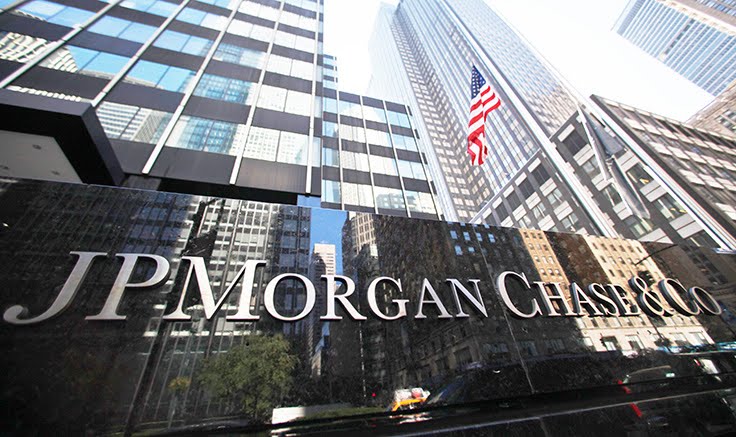
Actual ‘digital gold’

JP Morgan has unveiled plans to tokenize gold bars on its blockchain Quorum. The bank is turning to blockchain to reduce the friction involved in commodities trading.

The tokenization of a commodity like gold reduces the costs and risks for traders. It also permits two parties to complete a transaction without the need of a third party, such as a broker. Quorum even allows people outside of JP Morgan to tokenize their gold.

How the tokenization works

Umar Farooq, JP Morgan’s head of blockchain initiatives, described the process of bringing a physical gold bar onto the blockchain:

"They wrap a gold bar into a tamper-proof case electronically tagged, and they can track the gold bar from the mine to end point – with the use case being, if you know it's a socially responsible mine, someone will be willing to pay a higher spread on that gold versus if you don't know where it comes from. Diamonds is another example."

A little more about Quorum

Quorum is a fork of Ethereum developed by JP Morgan for enterprise use cases, such as tokenizing gold. JP Morgan could be considered an ‘Ethereum maximalist’. The company praises the protocol for its decentralization and performance.

Quorum may eventually be spun out of JP Morgan to its own entity. The company is researching numerous use cases for the blockchain network.

14131bd1-4966-439a-967a-fda7fb823549.png 42458bd8-d158-4e97-847f-649e2ec7db28.png 42458bd8-d158-4e97-847f-649e2ec7db28.png baf3ea07-8e23-4ef1-ab81-2c7dd0e535cc.png
SPACE

ConsenSys Wants to Mine...Asteroids?

Turning toward space

According to a press release published yesterday, ConsenSys Inc. has acquired Planetary Resources Inc. for an undisclosed amount.

Founded in 2009, Planetary Resources is on a mission to collect the natural resources available in the solar system by exploring asteroids. The venture brings hopes that the newly found asteroid resources will bring “a new paradigm of travel and human presence in space.”

Since ConsenSys is traditionally a blockchain software company that invests in blockchain-related startups, it’s interesting that CEO Joseph Lubin has turned towards space exploration.

Enter Ethereum

According to the press release, Planetary Resources will help ConsenSys bring Ethereum’s capabilities to facilitate the next frontier’s commerce.

Speaking on the subject, Lubin commented:

"Bringing deep space capabilities into the ConsenSys ecosystem reflects our belief in the potential for Ethereum to help humanity craft new societal rule systems through automated trust and guaranteed execution."

Planetary Resources is only one project in a portfolio of ventures that have hopes to decentralize different industries.

14131bd1-4966-439a-967a-fda7fb823549.png 42458bd8-d158-4e97-847f-649e2ec7db28.png 42458bd8-d158-4e97-847f-649e2ec7db28.png baf3ea07-8e23-4ef1-ab81-2c7dd0e535cc.png
INTERNATIONAL

Venezuela’s State Crypto ‘Petro’ is Now Available for Sale

Background on Petro

In December of last year, the government announced that they are establishing a national cryptocurrency to combat the hyperinflation problem. The government-backed coin is called 'Petro' and is claimed to be backed by the country's oil reserves.

The hyperinflation has been caused by the country's central bank endlessly printing more currency to pay for the massive deficit the government is running. The economic effect has been even more severe than the Great Depression and the impact of the falling of communism on Russia.

As a result of the hyperinflation, it now costs 1,000,000 bolivars to buy a cup of coffee (29 US cents) and rather than counting bills, merchants instead resort to weighing stacks of cash to estimate its value.

Now for sale

Months in the making, Petro is now available for sale to the public. Venezuelan citizens are able to buy the digital currency with either Bitcoin or Litecoin via a web portal controlled by the government.

Now that it is available to the public, we will finally see if this idea can complete its mission of slowing the hyperinflation. Some have been skeptical of how the government has managed this crypto issuance, but it will ultimately be the citizen's decision if the crypto is trustworthy.

14131bd1-4966-439a-967a-fda7fb823549.png 42458bd8-d158-4e97-847f-649e2ec7db28.png 42458bd8-d158-4e97-847f-649e2ec7db28.png baf3ea07-8e23-4ef1-ab81-2c7dd0e535cc.png
KNOW THE NUMBERS

Affluent Millennials and Crypto

In a new study released by Edelman, crypto seems to be popular among affluent millennials aged 24-38.

The study covered multiple different topics but most interesting was the demographics interaction with cryptocurrencies.

87fa782e-dc4a-4e54-9df9-abd90f8de4ce.png

Perhaps surprising is the trust that this demographic has in blockchain as 74% believe blockchain will make the global financial system more secure.

In addition, 31% of the group is interested in using cryptocurrency but only 25% actually use or hold cryptocurrency - showing possible room for growth.

14131bd1-4966-439a-967a-fda7fb823549.png 42458bd8-d158-4e97-847f-649e2ec7db28.png 42458bd8-d158-4e97-847f-649e2ec7db28.png baf3ea07-8e23-4ef1-ab81-2c7dd0e535cc.png

BITS

But wait, there's more...

  • Announced Wednesday, Dapper Labs, the startup that spun out of parent firm Axiom Zen to continue working on CryptoKitties, has secured $15 million in funding.
  • Crypto exchange Bithumb has teamed up with crowdfunding platform seriesOne to launch a compliant security token exchange in the U.S.
  • Crypto finance company Circle has joined the Global Digital Finance (GDF) industry body as a founding member to develop a global “Code of Conduct” for crypto.

MEME

Bri7ryQf8RIt7CQA0WQsFjZPo7tcNZ28nih_2hs6xQU.jpg?fit=crop&crop=faces%2Centropy&arh=2&w=640&s=f7336f0a414e141f45bed2dd026bbf6d

SHARE UNBANKD


If you ❤️ Unbankd, share us with your friends to help them get crypto smart too!

So far you have 0 referrals but we still have more rewards for you.

5d3ce366-c3c4-40bb-a87b-701169b0875c.png

Or copy & paste your unique link to share:
https://unbankd.co/?ref=192f87b56d


SUBSCRIBE

FEEDBACK

ADVERTISE

620247f1-c290-436d-b181-1ff7ecc0623e.png9148e503-e2ca-4405-8e60-42cf4e623229.pnga16e12a2-ba9c-4b58-a95d-629210d7ac86.png
Unbankd

303 5th Ave SE, Minneapolis, MN 55414

The above is not intended to be investment advice.

Copyright © 2018 Unbankd, All rights reserved.

If you don't absolutely love us, drop us.

Wednesday, October 31, 2018

Last Chance! Save $400 on Your Ticket to Consensus: Invest

And see Bakkt talk physically settled bitcoin futures
To view this email as a web page, go here.
Alert: To celebrate Bitcoin's 10-year white paper birthday, we are offering CoinDesk readers $400 off their ticket to Consensus: Invest until tonight, 11:59PM EST, October 31st. Register now

And by the way ... Here's a big reason to register. 

With more infrastructure being brought to market and the prospect of regulatory certainty, institutional interest in participating in the digital asset markets is rising. 

We're excited to announce that Jeff Sprecher, the Founder, Chairman and CEO of Intercontinental Exchange (NYSE: ICE) and Chairman of the New York Stock Exchange, and Kelly Loeffler, CEO of Bakkt, will be joining us at Consensus: Invest. 

In August, ICE announced the formation of Bakkt — with launch partners including Starbucks, Microsoft, and BCG — a new, federally-regulated global platform to buy, sell, store, and spend digital assets, beginning with Bitcoin.

Subject to regulatory approval, Bakkt’s first phase will include physically delivered daily Bitcoin futures and a warehouse for keeping Bitcoin secure.

What makes Bakkt’s regulated offering unique is that, unlike others, settlement will require the physical transfer of bitcoin and includes a secure means of storing digital assets, marking a major step forward in the development of the space for institutional investors.
Jeff Sprecher
Founder, Chairman & CEO,
Intercontinental Exchange
Chairman, New York Stock Exchange
Kelly Loeffler
CEO
Bakkt
CoinDesk's Michael Casey will take the stage with Jeff & Kelly in a fireside discussion, talking about why ICE decided to launch Bakkt and where the company sees the industry heading. 

To learn more about how the institutional marketplace for digital currency is evolving, secure your ticket and register today.
Register Now

Happy Birthday Bitcoin White Paper

Ten years ago, the bitcoin white paper was released on a cryptography mailing list. It was titled "Bitcoin: A Peer-to-Peer Electronic Cash System" and created an entirely new industry that today, we're thrilled to support.

To celebrate the 10-year white paper birthday, we are offering readers of CoinDesk $400 off their ticket to Consensus: Invest. 

Use the code BTCBDAY or click one of the register now buttons in this email to automatically save $400.

This offer expires at 11:59pm EST tonight, October 31st. So don't wait!

We have even more planned to celebrate Bitcoin's 10th birthday, so stay tuned!
Register Now
OUR SPONSORS
This email was sent by: CoinDesk
250 Park Avenue South New York, NY, 10003, US


Want to change how you receive these emails?
update your preferences or unsubscribe from this list 


📌 Crypto 'Fake News', Bitcoins After Death, and Where Did The Money Go?

 MUST READS 

Crypto "Fake News"


Can you trust what you are reading online?

In a world filled with claims of "fake news" and paid for media outlets, people have begun to question whether what they are reading is independent journalism or not. Although we see this in traditional news, we hadn't seen a push back on pay-to-play news in the cryptoverse. That is, until now...

Corin Faife of BREAKER Magazine has published a story showing a lapse in journalistic ethics amongst prominent crypto news outlets.

After setting up a fake email account under the name Nikolay Kostarev, he emailed 28 coin journals through their "contact" or "advertise" links to inquire about advertising rates. If the website replied with price information, he asked how much it would cost for an article "to not be marked as sponsored."

What did he find? 12 of the 28 outlets responded that they would publish the content without identifying it as sponsored. You can see the prices that the companies charged here.

3 takeaways:
  • This news shouldn't come as a surprise. In a world of hacks, exit scams (more on this later), and fake ICOs, you should be skeptical of everything you read in crypto.
     
  • You HAVE to do your own due diligence.
     
  • Find a news outlet you can trust.
Our mission at CoinSnacks is and has always been to break through the noise to find you, the reader, the news you need to know as a retail investor or crypto fanatic. We are an independent group who reads hundreds of articles every week to bring you what we believe is must-know information.

With that, we will never accept pay-to-play articles. Every news article that you see on CoinSnacks has been vetted by our team. We go above and beyond to find and publish independent journalism. 👍

Of course, as you are sure to notice, CoinSnacks does accept sponsors. Our sponsors keep our lights on, buy our coffee, and allow us to remain independent. We wouldn't be able to produce this newsletter without them. But rest assured, any sponsor will clearly be marked as such.

Now, on to the rest of this weeks news…
 

Where Did The Money Go? Inside the Big Crypto ICOs of 2017


Speaking with crypto entrepreneurs, investors and industry analysts, Jeff Kauflin at Forbes set out to answer two questions:
  • 🏁 How far have the 10 largest ICO-funded projects progressed in their plans?
     
  • 💸 Where is the ICO money now?
"If you had purchased all 10 of the largest ICOs during their token sales, you would have fared well through the middle of October 2018. A $100,000 investment would now be worth $160,936, compared with $113,722 for the S&P 500. But six of the 10 have negative returns since their ICO, and one has mysteriously vanished. If you had simply sunk your $100,000 into bitcoin, you'd have $264,417."
 

Why Should I Continue To Be Optimistic About Crypto?


In wake of Bitcoin's 10-year anniversary, instead of looking back (what everyone else is doing today), we're going to look a few steps forward.

The progress we've seen over the last 10 years has been nothing short of remarkable... but in today's bear market, there hasn't been many price-forward catalysts to hang our hats on.

But as Michael Spencer explains in this essay, November may give us a run for our money. Literally.

Although we aren't giving investment advice, it's clear there are several positive indicators for crypto assets just around the corner that could alter the entire market in the next two months.
 

 SPONSORED 

Meet the Man Behind the Largest Marijuana IPO Ever


At the American Cannabis Summit the first-ever nationwide event for cannabis investors - former Speaker of the House, John Boehner, revealed why he's going ALL-IN on marijuana... and exactly how ordinary Americans can make a fortune from this hundred-billion-dollar industry. 

To see a special rebroadcast of this historic event, click here.


 DEEP DIVE 

Bitcoin as a Living Organism


Dare we call this cute?

Dan Held has written a series of articles in which he likens Bitcoin to a living organism... something that is able to evolve in order to survive.

We suggest at least checking out the first article. At a minimum, it's a fun read:
  • (1/4) Species: Sound Money (sanum pecuniam)
  • (2/4) Season: Central Banks and the 2008 Financial Crisis
  • (3/4) Soil: The Cypherpunks
  • (4/4) Gardening: The Revolution Begins

Canadian Crypto Exchange MapleChange: Hacked or an Exit Scam?


The Canadian crypto exchange, Maple Change, was reportedly "hacked" last week... resulting in nearly $6 million of losses.

But no one is buying it.

They were allegedly hacked... said funds can't be recovered... and then deleted their website, Discord channel, and other social media outlets.

That's what we like to call an "exit scam."

Generally, these events happen in the ICO market. A new ICO will come flying out of the gates, raise money, and then quickly disappear without ever launching a product. Nevertheless, these exit scams and false hacks are nothing new.

Keep in mind: If you don't hold your private keys, you don't really own your tokens.

What Will it Take for Crypto to Boom Again?


AI failed to achieve any of its goals for fifty years and then suddenly it was powering everything from driving directions, to search engines, all while understanding your voice, and driving cars around busy city streets.

Just like AI, crypto will reach a tipping point where the hype recedes and it starts to do real things that matter. How? Daniel Jeffries argues that Bitcoin will evolve the quickest by looking to the past, not the future.
 

 REGULATORY FRONT 

Is Bitcoin Secretly Messing with the Midterms?


In an era of Russian hackers, super PACs and shell corporations being used by foreign entities to influence voting, officials tasked with maintaining the integrity of state and local elections have one more thing to worry about: crypto-candidates.
 

Analysis: Russia and Venezuela Dominating LocalBitcoins Volumes


Developing economies are increasingly playing a larger role in the Bitcoin ecosystem. Using LocalBitcoins as a proxy for country specific Bitcoin trading, The Block found that in July 2013, about 90% of all Bitcoin volume was coming from the U.S., the UK, and Australia. Fast forward 5 years, these three countries now share a mere 19% of all volumes.

So why are Russia and Venezuela leading the pack?
  • Russia is expected to approve new legislation regarding the legality of local cryptocurrency exchanges by the end of 2018. Until then, there are no regulated cryptocurrency on-ramps, which explains the high LocalBitcoins volumes.
  • Venezuela is seeing growth due to the country's hyperinflation, which is now estimated to be close to 200,000% annually. The International Monetary Fund (IMF) projected it could hit 1,000,000% by end-2018

 TWEET OF THE WEEK 

Other Articles You May Enjoy

The CoinSnacks weekly digest is a manually curated newsletter that delivers fresh content covering cryptoassets and the evolving blockchain community for investors around the world. The digest is curated by CoinSnacks employees and sent once a week.
CoinSnacks | 5500 Military Trail Suite 22-250 | Jupiter, Florida | 33458

Unsubscribe | View in Browser